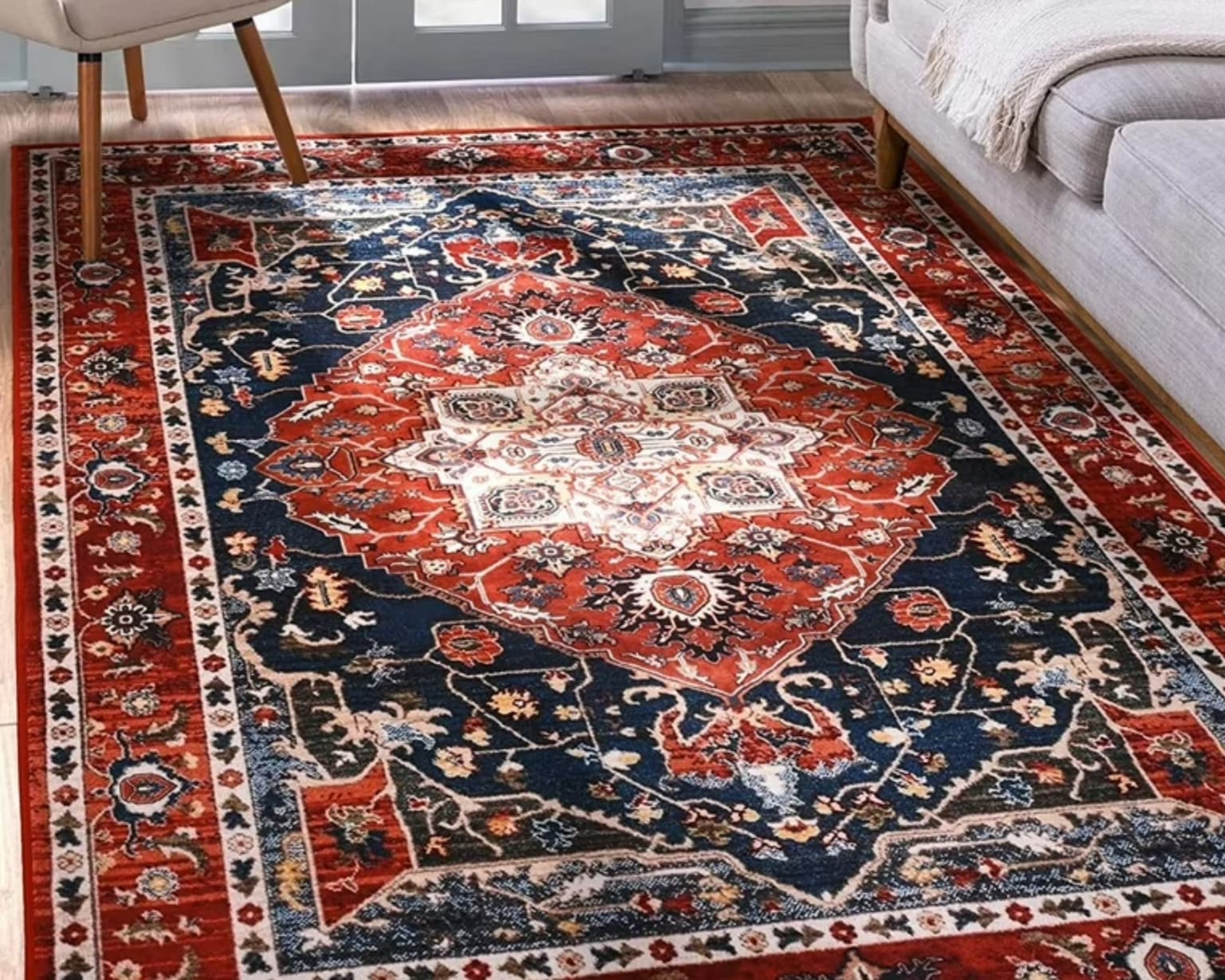
More often than not, the Oriental rug is the oldest object in the room and the one carrying the most history in its knots. Some were carried home from a trip taken decades back. Others came down through the family, the sort of rug that has anchored two or three generations of dining tables and outlasted everyone who once sat around them. Here's the hard part: one careless cleaning can wipe all of that out in an afternoon, bleeding the dyes, shrinking the wool, or weakening the foundation the whole rug rests on. Safe-Dry® Carpet Cleaning of Carrollton cleans Oriental rugs with a carbonating, low-moisture process that draws out deep soil and odor while leaving the color, the hand, and the structure exactly as they were.
Delicate textiles have been our work for three decades, and this method was built for this exact kind of rug. No flood of water to chase one dye into the next. No detergent to lock residue into a natural fiber. No heat to shrink wool or stress silk.
A vegetable-dye antique is nothing like a showroom rug
Everything hinges on reading the rug first, because the wrong assumption here is what destroys heirlooms. We identify the fiber to start, wool, silk, cotton, or a blend, then the construction, hand-knotted, hand-tufted, or machine-made. The dyes get studied hardest of all. Natural vegetable dyes shift far more easily than modern synthetics, so an old piece colored with indigo and madder is handled nothing like a rug that rolled off a showroom floor last year. A colorfastness test goes somewhere out of sight, and if it reads unstable, we rethink the plan before committing to anything.
Dry cleaning is the next step, and none of the others justifies itself quite so plainly. A year or two on the floor can leave a rug holding pounds of fine soil packed into the base of the pile, far below where a vacuum reaches. Before a drop of moisture goes near it, professional dusting equipment vibrates that debris loose and pulls it out. That single move prevents most of the grinding wear a rug accumulates over the decades, and on a piece meant to outlive the family that owns it, that's the part that counts.
Cleaning it without gambling on it
With the dry soil gone, we work the visible stains, worn lanes, and pet spots one at a time using hypoallergenic pre-treatments made for natural fiber. Where pet odor has set in, enzyme formulas break the organic contamination apart at its source instead of masking it.
The carbonating clean does the main lifting, releasing soil from the fiber and leaving neither soap nor detergent behind, all on roughly a tenth of the water a steam process demands. On wool, silk, and vegetable-dye rugs, holding the moisture that low is precisely what separates a safe cleaning from a ruined heirloom. A gentle, wool-safe rinse carries off the last of the loosened impurities, strong extraction pulls the moisture back out fast, and together they keep the dry time short and the mold risk near zero. If you'd like it, a fiber protector can go on to guard against future staining without touching the rug's feel or look, and then the pile is groomed so it lies even and true. We finish by going over the cleaned rug with you side by side.
Why these rugs ask for a careful hand
A good Oriental rug can outlast the people who first bought it, but only with care along the way. Day after day, airborne dust, dander, and the cedar and ragweed pollen that sweep through North Texas by season drift down into the pile. Foot traffic tamps all of it deeper into the wool, and over the months that buried grit dulls the colors and quietly saws at the fibers from within. Cleaning the rug pulls that material out before the damage turns visible and permanent.
The air-quality angle carries just as much weight. A rug filters on its own, trapping allergens that would otherwise hang in the room, and once it's full it starts handing those particles back with every step. In a Carrollton home where someone lives with allergies or asthma, a rug left too long between cleanings quietly works against the air you're trying to keep clean.
The method protects the rug even as it cleans it. Very little water means it can't shrink. No detergent means no color bleed and no film left to snag the next round of soil. And with no harsh chemistry in play, the wool and silk hold their strength and their softness for years.
Why Carrollton hands us these rugs
Delicate natural-fiber textiles are the specialty our certified, insured, background-checked technicians train for, and wool-safe approved products ride along on every visit. Families across northwest Dallas County trust us with rugs that carry real value and real sentiment precisely because the method leads with gentleness. A 100% satisfaction guarantee stands behind every job.
With no soap residue in the fiber, nothing is left to pull fresh dirt back in, so the rug holds its clean up to four times longer between visits. Low-moisture carbonation dries up to eight times faster than hot-water methods, which is why an in-home cleaning is usually usable within the hour.
We serve Carrollton, Farmers Branch, Irving, and the surrounding northwest Dallas County area. If you're also weighing carpet cleaning or upholstery cleaning, we can fold it into the same visit.
Frequently asked questions
Is this truly safe for wool and silk? It is. Nothing in the solutions is toxic, all of it is hypoallergenic, and none of it contains soaps or harsh chemicals. The low-moisture carbonated method was designed around natural fiber from the outset. We confirm colorfastness up front and rinse with wool-safe approved formulas.
Could the colors run? The colorfastness test comes first, and between the low moisture and the total absence of detergent, dye migration stays minimal. If the test flags unstable dyes, we either change the approach or move the rug somewhere the conditions can be controlled more closely.
Why not just rent a steam cleaner and handle it myself? A steam machine forces hot water and detergent deep into the rug, and that can bleed the natural dyes, shrink a wool foundation, and leave a residue that keeps drawing in dirt. On a genuine Oriental piece the risk rarely justifies the savings. We work with a fraction of the water and no soap at all.
Will you get old pet stains and odors out? Yes. Enzyme and oxidizer treatments target the organic contamination at its source, and when urine has reached the backing, subsurface extraction lifts it from below. Every product we use is safe for the fiber and the dye.
How often should an Oriental rug be cleaned? For most homes, every twelve to eighteen months, or every six to nine with pets or young kids. Regular care keeps the colors bright and keeps allergens from settling deep in the pile.
How long does it take? In-home service usually runs one to two hours depending on size and soil, followed by about an hour to dry. A piece that needs deeper plant processing or a repair typically takes two to five business days.
Book your oriental rug cleaning
Call 469-521-9367 or book online. We serve Carrollton, Farmers Branch, Irving, and the surrounding northwest Dallas County area. Not sure whether your rug needs in-home or in-plant service? Describe it when you call and we'll recommend the best route. Booking runs 24/7. See the coupons page for current offers.